By LCN Business Desk
The El Nino consolidating in the equatorial Pacific is being written up in Brazil as the leading climate risk to the 2026/27 harvest. The World Meteorological Organization expects the phenomenon to intensify over the coming months, with a probability close to 100 per cent that its effects are felt through to February 2027, Exame reported.
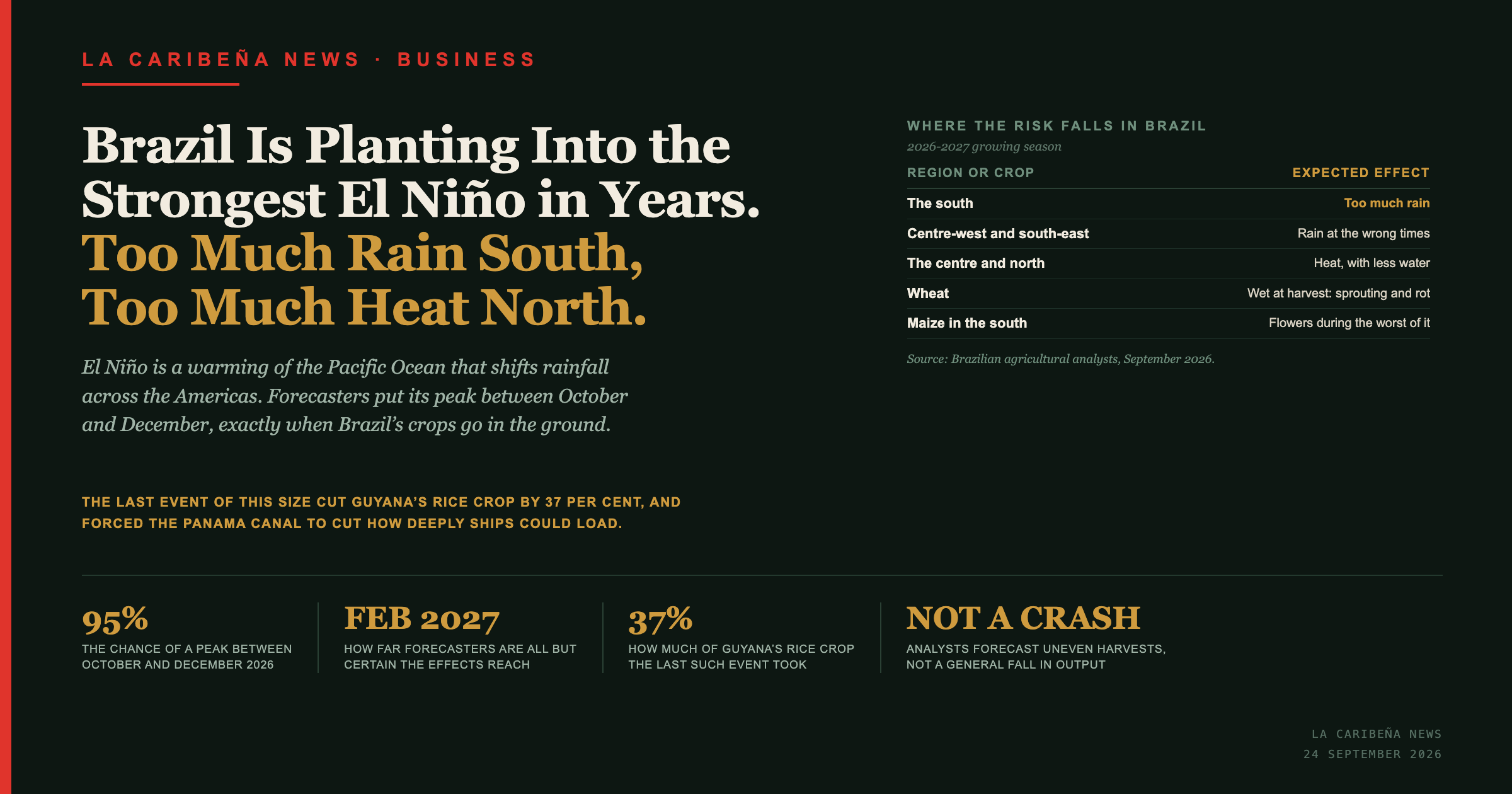
The event may last until April 2027, with a 95 per cent probability of reaching its peak between October and December 2026, Estado de Minas reported. Brazilian analysts are not forecasting a general fall in production. They are forecasting unevenness.
Where does the risk fall inside Brazil?
| Region | Expected effect |
|---|---|
| South | Excess rain |
| Centre-West and South-East | Irregular rainfall |
| Centre-North | Heat, with less water available |
| Wheat | Excess moisture at harvest raises the risk of grain sprouting before it is taken off, fungal disease and loss of commercial quality |
| First-crop maize in the south | Flowering exposed to the peak of instability and to hailstorms between November 2026 and January 2027 |
| Soya, maize and cotton | Effects may reach some of the municipalities that produce most of each |
Source: Brazilian agricultural analysts as reported by Exame, Estado de Minas and Space Money, September 2026.
A late soya crop in Mato Grosso would move the export calendar and change how much maize is available in the second half of 2027. Excess rain in the south would hurt wheat quality, raise import needs and slow the cooperatives, Space Money reported.
What did the last comparable event do here?
It took 37 per cent of a Guyanese rice crop. This newspaper set out the National Oceanic and Atmospheric Administration's odds and that precedent in NOAA Puts a 69 Per Cent Chance on a Record El Nino.
The Panama Canal is the region's other exposure to the same weather. Panama cut the canal's loading limit four times in nine weeks, reported in Panama Has Cut the Canal's Loading Limit Four Times in Nine Weeks, and has since cut daily booking slots to 32, with CARICOM's exposure costed in The Panama Canal Cut Its Daily Booking Slots to 32. One ship paid US$5.3 million to cross, in A Ship Paid US$5.3 Million to Cross the Panama Canal.
Why does a Brazilian harvest reach a Caribbean shelf?
Brazil is a principal origin for the region's grain, meat and processed food, and it is the largest buyer of American diesel this month because its planting season has started, covered in Trump Has Backed a Diesel Export Ban. A harvest that shifts by weeks moves freight, price and availability along the same lines that feed Caribbean importers.
Food prices are already the live measure. Venezuela's food basket rose 12.5 per cent in August while Georgetown's food prices fell 0.5 per cent, reported in Venezuela's Food Basket Rose 12.5 Per Cent in August.
Brazil's planting runs from now to the end of the year, and the peak of the event is forecast for the same window.
What the title card shows
- Close to 100 per cent: the probability that El Nino's effects are felt through to February 2027, on the World Meteorological Organization's forecast.
- 95 per cent: the probability of a peak between October and December 2026. The event may run to April 2027.
- Three different risks, not one: excess rain in Brazil's south, irregular rain in the Centre-West and South-East, and heat with less water in the centre-north.
- November 2026 to January 2027: when first-crop maize in the south flowers, exposed to the peak of instability and to hail.
- 37 per cent: how much of a Guyanese rice crop the last comparable event took.
Frequently Asked Questions
How strong is this El Nino expected to be?
The World Meteorological Organization expects it to intensify, with effects felt through to February 2027 at a probability close to 100 per cent and a 95 per cent chance of peaking between October and December 2026. Brazilian coverage describes the peak as a Super El Nino.
Will Brazilian production fall?
Analysts are not forecasting a general fall. They expect unevenness: too much rain in the south, irregular rain in the Centre-West and South-East, and heat with less water in the centre-north, which makes yields unpredictable rather than uniformly lower.
Which crops are most exposed?
Wheat, from excess moisture at harvest that can sprout the grain and bring fungal disease; first-crop maize in the south, whose flowering coincides with the peak; and soya, maize and cotton in some of the highest-producing municipalities.
What is the Caribbean connection?
Brazil is a principal origin for the region's food imports, and a shifted harvest moves export calendars, freight and price. The same weather pattern also affects the Panama Canal, which has cut both its loading limit and its daily booking slots.