Georgetown, Guyana · La Caribeña News
The business lessons shared recently by Guyana Manufacturing and Services Association (GMSA) President Rafeek Khan are increasingly validated by independent international research, particularly in developing economies where entrepreneurs face high operational pressure, financing constraints, and rapid economic change.
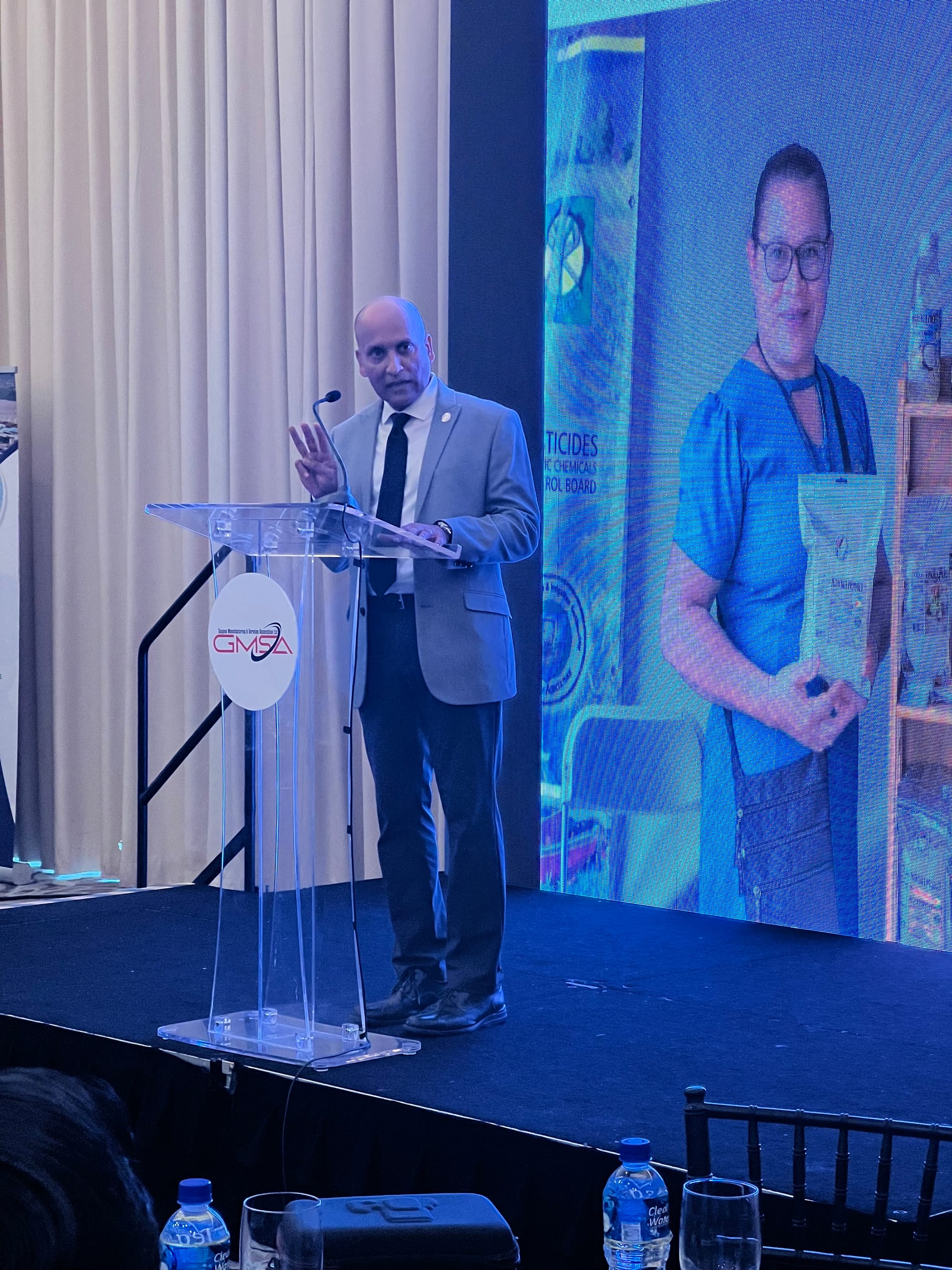
During his address at a business luncheon, Khan focused on several themes that resonated with Guyanese entrepreneurs: passion, disciplined diversification, calculated financial risk, and building strong teams. While his remarks were grounded in personal experience, global studies show these principles are among the strongest predictors of SME resilience and sustainable growth.
Passion Remains One of the Strongest Drivers of SME Survival
Khan told attendees that passion is what keeps entrepreneurs moving “when things are not going right.” Research supports that position.
A study published in the Journal of Business Research found that entrepreneurial passion significantly improves SME performance. Passionate founders are more likely to persist through operational challenges, adapt during economic shocks, and remain committed to long-term development. Researchers described passion as a critical force sustaining momentum during difficult periods.
This becomes particularly relevant in Guyana’s current environment, where rapid growth opportunities also bring intense competition, staffing shortages, rising operational costs, and market volatility.
His Warning About Diversification Aligns With Global Business Strategy
One of Khan’s strongest warnings focused on businesses diversifying too aggressively and losing focus on core strengths. That position mirrors what international business researchers call “related diversification,” where companies expand within industries connected to their existing expertise rather than pursuing unrelated opportunities.
Khan illustrated this by referencing companies that successfully expanded within their existing sectors while maintaining operational specialisation.
Research published in Systems and other SME resilience studies shows that businesses diversifying within their core competency areas tend to outperform companies that overextend into unfamiliar industries. In Guyana, oil-and-gas-driven economic opportunities are encouraging businesses to expand rapidly into sectors where they may have limited operational experience, making the distinction consequential.
The Fear of Borrowing Continues to Hold Back Many Caribbean Businesses
Khan’s remarks about Guyanese reluctance to borrow reflect a recognised issue across the Caribbean SME sector. The Inter-American Development Bank has repeatedly identified limited access to financing and cultural hesitation toward borrowing as major obstacles preventing SMEs from scaling regionally.
Research into entrepreneurial resilience consistently shows that businesses with access to strategic financing are better positioned to invest in equipment, staffing, technology, and expansion. Khan’s comments about leveraging assets such as homes as collateral may be uncomfortable, but secured financing has historically been a feature of critical business growth phases globally.
His emphasis on calculated rather than reckless risk-taking aligns with modern SME governance principles. Studies examining post-pandemic SME recovery found that businesses willing to take measured financial risks adapted more successfully than those operating from fear-based decision-making. In Guyana’s expanding economy, access to capital increasingly determines whether businesses can compete for opportunities in construction, logistics, manufacturing, hospitality, and professional services.
Building the Right Team May Be More Important Than Individual Talent
Khan also told attendees that entrepreneurs should stop trying to do everything themselves.
“You are not gifted to do every single thing in your business.”
That reflects one of the clearer findings in global entrepreneurship research: collaborative leadership structures outperform founder-dependent businesses over the long term. A major SME resilience study published in PMC found that companies with strong management teams, delegated leadership structures, and collaborative operational systems were significantly more resilient during periods of crisis and rapid market change.
Khan’s observation that “dreamers and visionaries” often need executors, operational leaders, or joint venture partners aligns with what business strategy researchers describe as capability-based growth.
A Message Grounded in Discipline
Rather than promoting overnight success narratives, Khan’s address focused on discipline, sustainability, operational focus, and long-term thinking. As Guyana continues one of the fastest economic transformations in the Caribbean, many businesses face the dilemma he described: how to grow aggressively without losing operational focus or financial stability.
Passion may launch a business. Disciplined strategy, calculated risk, and collaborative leadership are what sustain it.