LA CARIBENA NEWS | OPINION & COMMENTARY
June 2026
A Commentary Published by La Caribena News
June 2026 | La Caribena News, Guyana
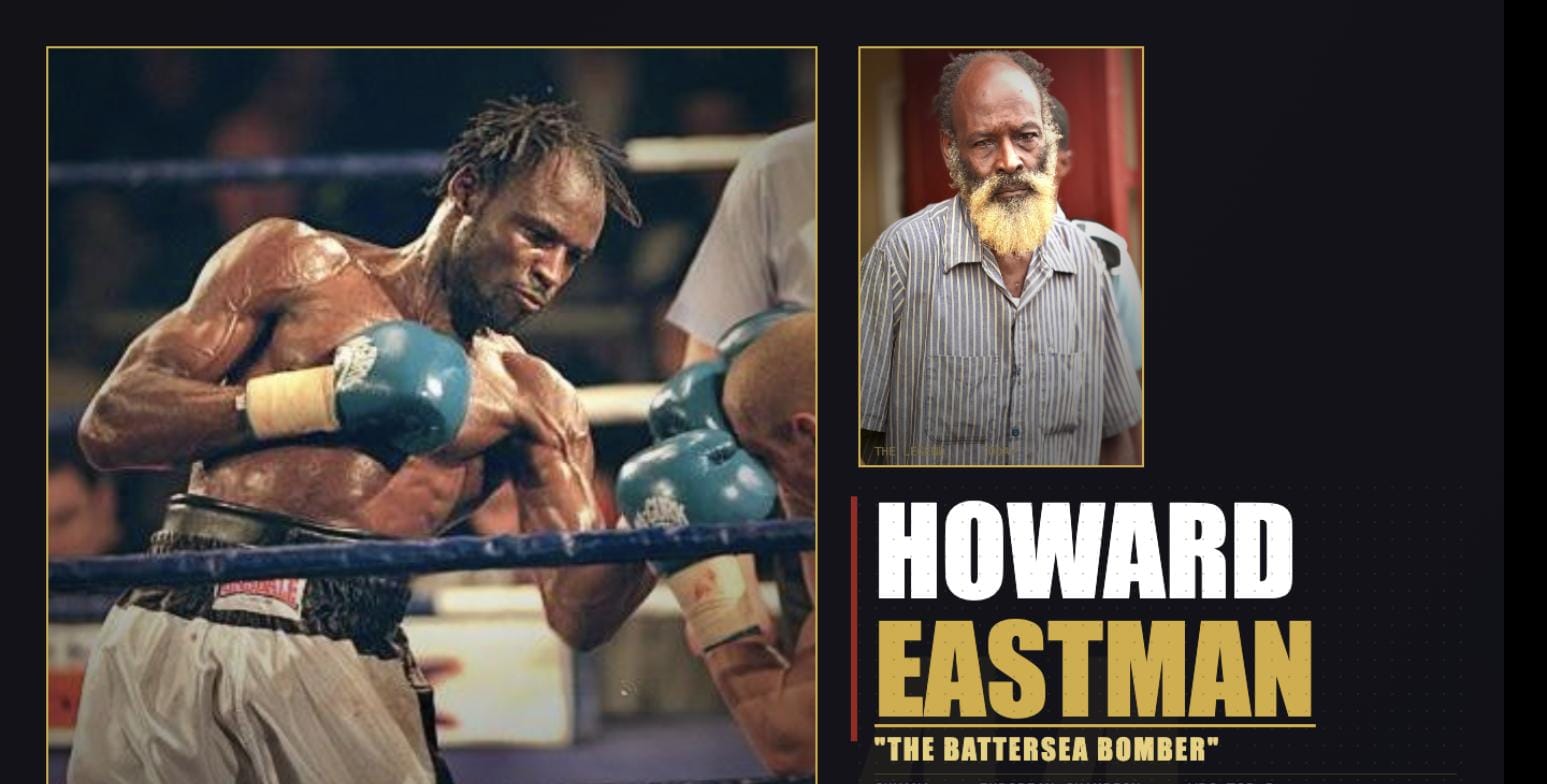
Howard Anthony Eastman climbed into a boxing ring more than two hundred times in his professional career. He fought the best middleweights in the world. He knocked down a WBA world champion in the final seconds of the twelfth round. He traded punches with the legendary Bernard Hopkins on the biggest stage the sport offers. He did all of this wearing Guyanese colours, carrying the pride of a nation on his shoulders, while the rest of us watched, cheered, and claimed him as our own.
He is 55 years old now. Unemployed. No fixed address. A father of six. And he will spend the next four years in a Guyanese prison for possessing 265 grams of cannabis.
The sentence, handed down by Magistrate Michelle Matthias in the New Amsterdam Magistrate's Court, is legal under Guyana's current framework. It is also backward, punishing without purpose, and an embarrassment to any government that claims to be building a modern, prosperous nation. This moment deserves serious scrutiny, not to vilify a magistrate doing what the law demands, but to hold up that law to the light and ask: what exactly are we defending?
Who Is Howard Eastman?
For those who have forgotten, or never knew, a brief accounting is overdue.
Howard "Battersea Bomber" Eastman was born on December 8, 1970, in New Amsterdam, Berbice, the very town where he was arrested. He grew up and made his way to Battersea, South London, where he built a professional boxing career stretching from 1994 to 2014. His career record stands at 49 wins and 13 losses. He held the British, Commonwealth, and EBU European middleweight titles twice each between 1998 and 2007.
In November 2001, on a Lennox Lewis undercard in Las Vegas, he fought for the vacant WBA World Middleweight Championship against William Joppy. He knocked Joppy down in the final seconds of the twelfth round and lost a controversial majority decision that remains disputed by those who watched it. In February 2005, he shared the ring with Bernard Hopkins, the undisputed middleweight champion of the world, in a fight that represented the pinnacle of his career.
He then came home. He won the Guyanese middleweight title. He defeated former WBA world welterweight champion Andrew Lewis. He carried this nation's name in rings from London to Las Vegas and back to Georgetown. That man is now in a prison cell.
What Is 265 Grams?
Two hundred and sixty-five grams is approximately 9.3 ounces, just over half a pound. In medical cannabis terms, it is roughly a three to six month supply for a patient managing chronic pain, anxiety, post-traumatic stress disorder, or sleep disorders. Peer-reviewed research indicates that effective daily doses for anxiety and PTSD treatment range from 25 to 50 milligrams of CBD, meaning 265 grams of cannabis could represent hundreds of individual therapeutic doses. It is a quantity that, in 25 American states, you can walk into a licensed shop and purchase legally over the counter.
In Jamaica, a citizen can possess up to 56 grams without criminal sanction. In Trinidad and Tobago, 30 grams is decriminalized. In Barbados, 14 grams results in a civil fine, not imprisonment. Guyana's own parliament removed custodial sentences for possession of 30 grams or less in 2021. The difference between 30 grams and 265 grams is, apparently, the difference between community service and four years in prison. That is a line drawn by a law written in a different era, for a world that no longer exists.
What the Law Requires
Section 5(1)(a)(i) of the Narcotic Drugs and Psychotropic Substances (Control) Act, Chapter 10:10, under which Eastman was charged, makes possession for the purpose of trafficking a serious criminal offence carrying significant custodial penalties. Magistrate Matthias was following the law. She noted that Eastman was a repeat offender, an aggravating factor under the Act. In addition to the 48-month sentence, she ordered him to pay a fine equivalent to three times the market value of the 265 grams. A homeless, unemployed man who cannot pay that fine faces further legal jeopardy.
The law is working exactly as designed. That is the problem.
The court did not order a probation report. There is no visible record of any inquiry into rehabilitation options. No apparent investigation took place into why a 55-year-old man with no fixed address and no income was before the court on this charge again, or what systemic support might break the cycle. The law gave the magistrate limited tools, and she used the blunt one available. The issue is not this magistrate. The issue is every member of parliament who allowed this law to remain unchanged, who applauded Eastman's victories in international rings and did nothing to protect him when the applause stopped.
Comparative Sentencing Across the Caribbean
Jamaica decriminalized possession of up to 56 grams in 2015 and now permits licensed cultivation. Trinidad and Tobago decriminalized up to 30 grams and allows adults to cultivate up to four plants per household. Barbados legalized medical cannabis in 2019 and decriminalized personal possession up to 14 grams. Several Eastern Caribbean states have taken similar steps. None of those societies collapsed. None reported any crisis attributable to cannabis policy reform. What they reported was a reduction in unnecessary criminalization and a freeing of judicial resources for more serious matters. In Guyana, the current framework produces mandatory imprisonment and a compulsory fine that a homeless man cannot pay. By the standards of the very region we claim kinship with, this is an outlier position, and not a defensible one.
North America, Europe, and the Direction of Travel
In December 2025, President Donald Trump issued an executive order directing the immediate reclassification of cannabis from Schedule I to Schedule III under the United States Controlled Substances Act. On April 23, 2026, Acting Attorney General Todd Blanche formally implemented that order, placing FDA-approved cannabis products in Schedule III and initiating a broader administrative hearing process. Schedule I substances are defined as having no accepted medical use and a high potential for abuse. The reclassification is an official federal acknowledgment that cannabis has medical value and has been over-penalized.
As of 2026, 25 American states and Washington D.C. have fully legalized cannabis for recreational use. Thirty-eight states allow it in some form, meaning over 70 percent of Americans live in a jurisdiction where cannabis is legal in some capacity. In Canada, full federal recreational legalization has been in effect since 2018. In the Netherlands, cannabis has been tolerated in licensed coffee shops since 1976. Germany legalized recreational cannabis for personal use in April 2024. Portugal decriminalized all drugs in 2001, with documented reductions in HIV infections, overdose deaths, and incarceration rates. Thailand removed cannabis from its national narcotics list in 2022. The evidence, across multiple continents, points in one direction: punitive criminalization of cannabis possession harms individuals without meaningful social benefit.
The Spiritual Dimension: What the Ancients Knew
There is a passage in the Book of Revelation, chapter 22, verse 2, that describes the river of life flowing from the throne of God. The scripture reads: "And the leaves of the tree were for the healing of the nations." The healing of the nations. Not the incarceration of the nations. The healing.
In the Hindu tradition, cannabis, known as "bhang," is sacred to Lord Shiva, one of the principal deities of the faith. The Atharva Veda, one of Hinduism's four foundational scriptures, written between 2000 and 1400 BCE, identifies cannabis as one of five sacred plants that "release us from anxiety." Sadhus, Hindu holy men who renounce worldly attachment in pursuit of spiritual liberation, have used cannabis in ritual and meditation for thousands of years as an aid to contemplative practice. Academic research documents this tradition extensively, including the peer-reviewed study "Cannabis, Lord Shiva and Holy Men: Cannabis Use Among Sadhus in Nepal."
Across shamanic traditions in Central Asia, the Americas, Africa, and the Pacific, practitioners have used cannabis as a healing and visionary plant for millennia. These were healers and spiritual custodians who understood in their bones what Revelation 22:2 expressed in verse: that the plants of the earth carry healing properties that human law has no authority to extinguish.
The Rastafari tradition, born here in the Caribbean, holds cannabis as a sacrament, a natural and divinely given plant that enables spiritual clarity. It is no accident that the Rt. Honourable Peter Tosh, in 1976, sang plainly and without apology: "Legalize It." He was not only making a political argument. He was making a theological one. Fifty years later, Guyana is still sending people to prison for possessing a plant that prophets, holy men, shamans, and scripture have all, at various points, called medicine.
Morocco, Lebanon, and the Muslim World's Evolving Position
Those who argue that cannabis reform is a Western or secular concern are invited to consider this. Morocco, a majority-Muslim nation, enacted Law No. 13-21 in July 2021, creating a full legal framework for the medical and industrial use of cannabis. Lebanon became the first Arab country to legalize cannabis for medical and industrial purposes in 2020. These are not irreligious nations. They are Muslim-majority societies that looked at the evidence and concluded that healing, not incarceration, is the appropriate framework for managing this plant.
The Medical Case for What Was in That Bag
Let us be specific about what 265 grams of cannabis can do for a human body and mind in medical terms. Research published in Frontiers in Psychiatry documents significant improvements in PTSD-associated insomnia and nightmares in patients treated with cannabis-based medicines. Studies in the National Institutes of Health database show that between 25 and 600 milligrams of CBD per day reduce anxiety measurably. A professional boxer who spent 20 years absorbing punishment in the ring is not an unlikely candidate for chronic pain. A homeless man without social support is not an unlikely candidate for anxiety or PTSD. Instead of asking those questions, the court put him in prison.
Jail as an Informal Housing Programme
There is a painful irony in imprisoning a homeless man that this society needs to name plainly. Howard Eastman has no fixed place of abode. He is 55 years old, sleeping rough in the town of his birth, the same town that watched him fight for a world title on international television. By sending him to prison, the state has solved its housing problem on his behalf. Four walls, a cot, three meals a day. That is not rehabilitation. It is storage.
The questions that should have been asked before sentencing are elementary. Did the court order a probation report? Is there any rehabilitation facility in Berbice or Georgetown that might have served this man's actual needs? Why is he a repeat offender? Has anyone in any official capacity ever asked why this specific man keeps returning to the criminal justice system, and what intervention might break that cycle? If those questions were asked and the answer was that no facilities exist, the problem belongs to the government that left the court without options. If those questions were not asked at all, that failure belongs to the court. Either way, a man who needed help got a cell.
The Alcohol Parallel
Every week in Guyana, people die on our roads from alcohol-related accidents. Families are destroyed by addiction to a substance that is not only legal but actively promoted, advertised, and taxed by the very government that imprisons people for possessing a plant. Alcohol is a pharmacological drug with a documented body count in this country: death by dangerous driving, domestic violence, liver disease, familial destruction. And yet we build no mandatory minimum sentences around it. We license bars on every corner, celebrate the industry, and collect the revenue.
I am not calling for the prohibition of alcohol. I am calling for intellectual consistency. If the stated criterion for criminalization is harm to individuals and to society, then the current framework, in which alcohol enjoys state protection while cannabis attracts imprisonment, cannot survive moral scrutiny.
Questions for the Ministers of Culture, Youth and Sport
To the Ministers currently holding responsibility for sport and youth in Guyana, these questions require a public answer.
Do you maintain a comprehensive list of Guyanese athletes who have represented this nation internationally? Is Howard Eastman on that list? When was the last time anyone from the ministry checked on him, or on any other aging national athlete living in financial distress? Do you have a programme to proactively engage former national champions in economic and social support systems? Is there a formal inter-ministerial partnership between Culture, Youth and Sport and the Ministry of Human Services and Social Security to ensure that national heroes do not end up homeless and vulnerable? If that partnership does not exist, why not, and when will it?
Howard Eastman is not the first national athlete to fall through every crack in our social safety net. He will not be the last. If you need help drafting a policy framework to address this, reach out. The rates are reasonable, and the result will go considerably further than sponsoring a local event for three to six hours of goodwill.
Promises Made, Still to Be Kept
In 2021, the government removed custodial sentences for possession of 30 grams or less. Lenox Shuman, leader of the Liberty and Justice Party, the only opposition lawmaker who participated substantively in that debate, suggested the amendments balance societal needs while alluding to the possibility of full decriminalization in the future. That future has not arrived. Attorney General Anil Nandlall was explicit that decriminalization was never the aim. Howard Eastman, with 265 grams, falls well above the 30-gram threshold. The partial reform does nothing for him, or for the hundreds of people charged and sentenced under Chapter 10:10 each year for quantities that would be legal in most of the democratic world. Political will exists in fragments. It needs to be assembled into comprehensive legislation.
What Judges Around the World Have Said
The judiciary itself, across multiple jurisdictions, has begun to speak plainly about the injustice of mandatory cannabis sentences. In the United States, a federal judge who sentenced a man to 55 years for selling marijuana later publicly expressed regret, calling the sentence unjust and disproportionate. The United States Sentencing Commission, in its 2023 report, documented systemic unfairness in a framework where cannabis convictions produce dramatically enhanced sentences through criminal history calculations bearing no relationship to actual harm caused. Judge Latrice Westbrooks, in a documented Mississippi Supreme Court dissent, wrote that mandatory habitual offender sentencing is completely at odds with the purpose of the criminal justice system. The trajectory of judicial opinion is toward greater flexibility, greater investment in rehabilitation, and explicit skepticism about whether imprisonment serves any constructive social purpose in cannabis possession cases.
Amsterdam, Thailand, and the Evidence
Amsterdam's cannabis tolerance policy has been in effect since 1976. The Netherlands is not a failed state. It has one of the highest standards of living in Europe, a robust legal system, and a cannabis tourism industry generating hundreds of millions of euros annually. Thailand removed cannabis from its narcotics list in 2022 and opened a legal medical cannabis market, diversifying its agricultural economy and attracting regional investment. Germany legalized recreational cannabis in April 2024. The evidence, across four continents, is that regulation outperforms prohibition on every measurable social indicator. The models exist. The political will is the only thing missing in Guyana.
The Economic Argument and Peter Tosh's 50-Year-Old Lesson
Guyana is in the midst of an extraordinary economic transformation. Oil revenues are reshaping the national budget. The government speaks of diversifying the economy, broadening the tax base, and building pharmaceutical and biotech capacity. The global legal cannabis market was valued at over $57 billion in 2023 and is projected to exceed $444 billion by 2030. Countries that moved early on regulated medical cannabis, from Canada to Germany to Morocco, are positioned to capture export revenues, research partnerships, and pharmaceutical development opportunities that prohibition forecloses entirely.
If we as a country are seeking to diversify the economy and broaden the tax base, perhaps it is time to listen to what the evidence says. The Rt. Honourable Peter Tosh said it plainly in 1976: Legalize It. He was not wrong then. He is certainly not wrong now.
This is a teachable moment for the learned Magistrate Michelle Matthias and for the rest of us. The lesson is not that the magistrate did anything wrong. She applied a law that is urgently overdue for revision. The lesson is that a society serious about justice, about healing, about economic development, and about the dignity of its national heroes cannot afford to leave that law unchanged for another day.
Howard Eastman knocked down a world champion in the twelfth round of a world title fight. He came home and gave this nation everything he had. He deserves better than a cell in New Amsterdam.
Class Dismissed.
FOOTNOTE
"First they came for the socialists, and I did not speak out, because I was not a socialist. Then they came for the trade unionists, and I did not speak out, because I was not a trade unionist. Then they came for the Jews, and I did not speak out, because I was not a Jew. Then they came for me, and there was no one left to speak for me."
Martin Niemoller (1892-1984), German Lutheran pastor, Holocaust survivor, and witness to the cost of silence.
For those who believe this does not concern them: Howard Eastman is not an abstraction. He is your neighbour, your cousin, your champion. The law that imprisoned him does not ask whether you personally use cannabis. It does not pause for national heroes. Laws written without compassion serve no one well. The time to speak is now, not after they come for you.
La Caribena News | Opinion | June 2026
www.lacaribenanews.com