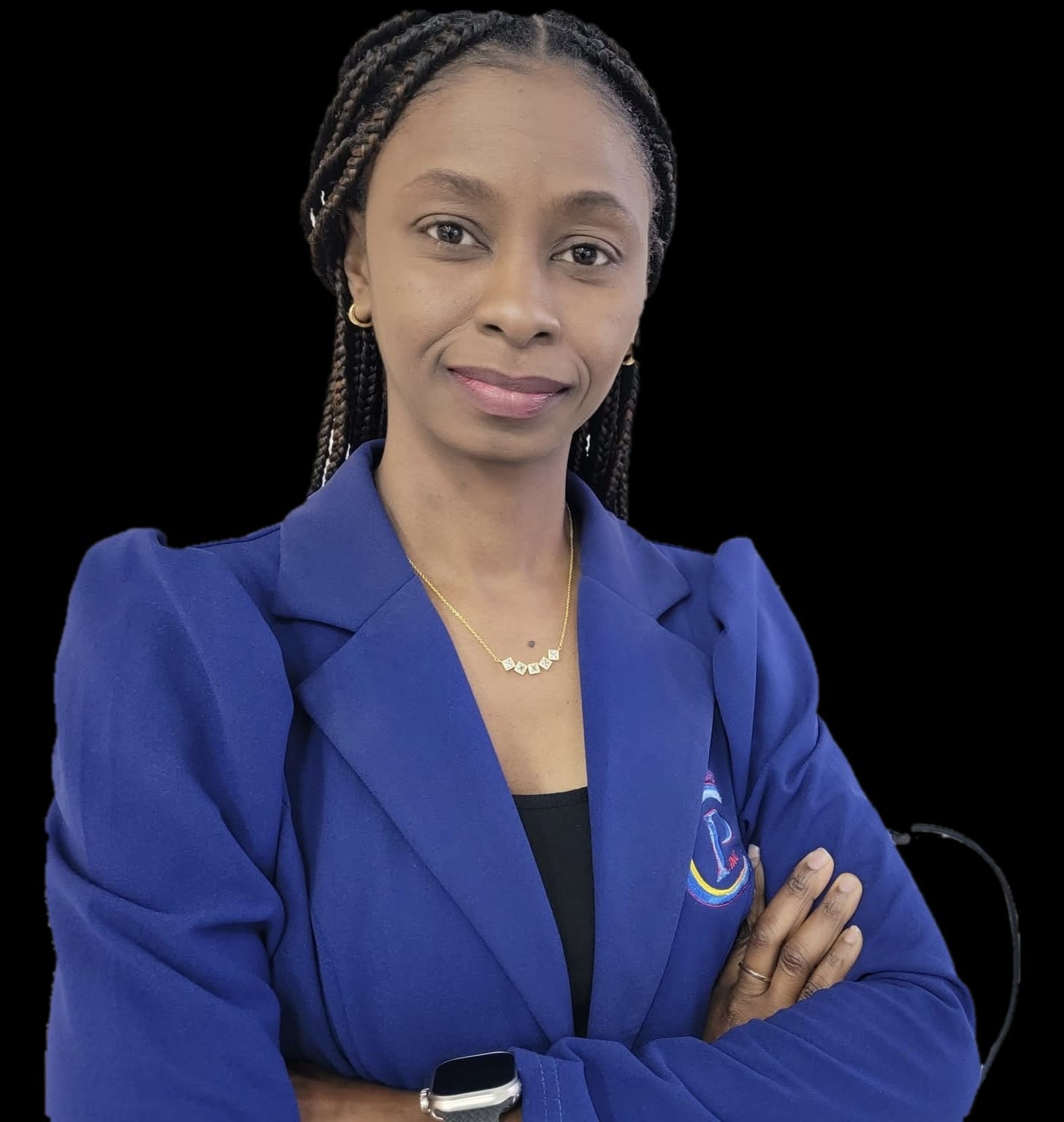
Carlyne Stewart’s biggest move has been whispered in boardrooms for months. The public is about to find out why.
La Caribeña News | Feature
QUICK FACTS
For months, the name “Beyond the Wheels 2.0” has moved through Georgetown the way real news moves before it breaks. Slipped into pitch meetings. Mentioned over coffee in Camp Street. Folded into the small talk between directors who keep finding themselves at the same dinner table. A national forum, they say. The Arthur Chung Conference Centre. Transportation and safety, at scale, with the kind of partners who do not show up unless the math is real.
The public has heard almost none of it.
That is by design. The woman behind the project is Carlyne Stewart, and quiet is how she works.
If you only know Stewart from her LinkedIn, you know the resume. Managing Director of Clarke’s Productions Inc. and Chief Experience Officer. Former secretary of the Women’s Chamber of Commerce and Industry Guyana (WCCIG). Years back, the National Communications Network covered CPI’s launch of a men’s mental health programme, where Stewart talked about creating a safe environment for men to discuss what they normally do not. A clean, credentialled, public-facing record.
What the resume does not capture is the discipline behind it. Stewart is the kind of operator who builds the room first and invites you to it second. The whispers about Beyond the Wheels 2.0 are not an accident. They are a strategy.
Aplomb, Quietly
When the WCCIG announced in December 2024 that Stewart was joining its board alongside Lexann McPhoy and Shevion Sears, the chamber called her an operations specialist and put her in the secretary’s chair. On paper, secretary is the least glamorous seat on any board. In practice, on a young chamber founded in 2019 with big ambitions and small bandwidth, it is where the work actually lives. Governance. Member engagement. The unglamorous backbone that decides whether the organisation is real or theatre.
Stewart served with aplomb. Members who watched her tenure describe the same things. Meetings that started and ended on time, most of the time. Committees that actually committed. An organisation that began to feel less like a networking club and more like an institution.
That sounds easy in a sentence. It is not.
The Tax No One Itemises
Read enough interviews with women who have led women’s organisations and a pattern emerges. The job is harder than the title suggests, and almost none of the difficulty is captured in the job description.
Rhonda Glynn calls it the Visibility Tax. Black and Caribbean women founders spend more hours marketing, networking, and validating their expertise than male peers, often without the same return on the effort. The World Bank’s Latin America and Caribbean team has documented the same pattern from a different angle. Time poverty. Network gatekeeping. A USD 1.7 trillion gender financing gap that the Women Entrepreneurs Finance Initiative has been measuring since 2022.
Translate that to running a young chamber in Guyana in the middle of an oil boom. The mission is bigger than the budget. The corporate sponsors you need are the same ones already over-committed to louder, older organisations. Half the time you are not raising money, you are convincing a finance director that women-owned businesses are not a CSR line item but a market.
Stewart did not say any of that in her board statements. She did not have to. Anyone who has watched a woman-led organisation try to scale recognised the playbook. Build the operational floor first. Earn the second meeting. Make the institution credible before you make it loud. The same operating logic LCN reported on in the woman-owned concierge firm filling Georgetown’s executive support gap, where founder traction came from solving the unsexy problems first and letting the brand follow.
What We Know About Beyond the Wheels 2.0
Here is what corporate Guyana has been told, piece by piece, behind closed doors. Beyond the Wheels 2.0 is a National Transportation and Safety Forum. It is being staged at the Arthur Chung Conference Centre. It is the second iteration of a concept Stewart has been testing longer than anyone thought. The conversations have spanned insurance, logistics, and public-sector lanes, which means the agenda is wider than road-safety pamphlets. Think regulation. Fleet management. Driver training economics. Mental health behind the wheel. Infrastructure spend.
What she has not done is run a press cycle. No teaser interviews. No save-the-date carpet-bombing on Facebook. No press release pre-announcing the press release. For a country where most major launches are over-marketed three months out and under-attended on the day, the silence is the tell. She is building the forum first.
This is not new behaviour for her. The “She Rise” Girls Empowerment Forum, hosted by the Gender Affairs Bureau and the Rights of the Child Commission, was the kind of event Stewart turned up to without a microphone, because the mentoring was the point. CPI’s men’s mental health programme launched without a billboard campaign. Stewart’s pattern is consistent. Do the work. Let the room talk.
Why the Quiet Bet Is Actually Big
Road safety in Guyana is not a niche issue. It sits at the intersection of three forces the country cannot ignore. An expanding fleet driven by oil-fuelled disposable income. Infrastructure that has not caught up to the traffic load. Workforce productivity numbers that compliance professionals, insurers, and HR directors are starting to read more carefully.
A serious national forum on transportation and safety, run with corporate partners rather than at them, lands inside that conversation with weight. It is the kind of project that pulls together actors who normally do not share an agenda. The same logic LCN unpacked in the quality gap Caribbean agro-processors cannot afford to ignore, where the missing standard is not glamorous but determines whether an entire sector graduates to the next level.
It is also a women-led project in a sector that does not routinely platform women. The OAS-CIM convening on Guyanese women’s economic rights put a number on the gap earlier this year. Stewart’s forum will not be billed as a gender event. It will be a transportation event. That is the bet. A woman leading the most operationally serious safety conversation in the country, without asking permission to do so.
What Happens Next
The forum date is still being held close. The speaker roster is still being finalised. The sponsors who have signed are not the ones who will be loudest about it, which is part of why the public has been kept out of the loop until the package is locked.
When the announcement breaks, expect the rollout to be deliberate. Stewart does not do soft launches. She does fully-built ones.
For now, the quiet bet is on the table. Boardrooms know. Coffee meetings know. The journalists who pay attention to who Carlyne Stewart is talking to, and where she is showing up, know.
The public is next.