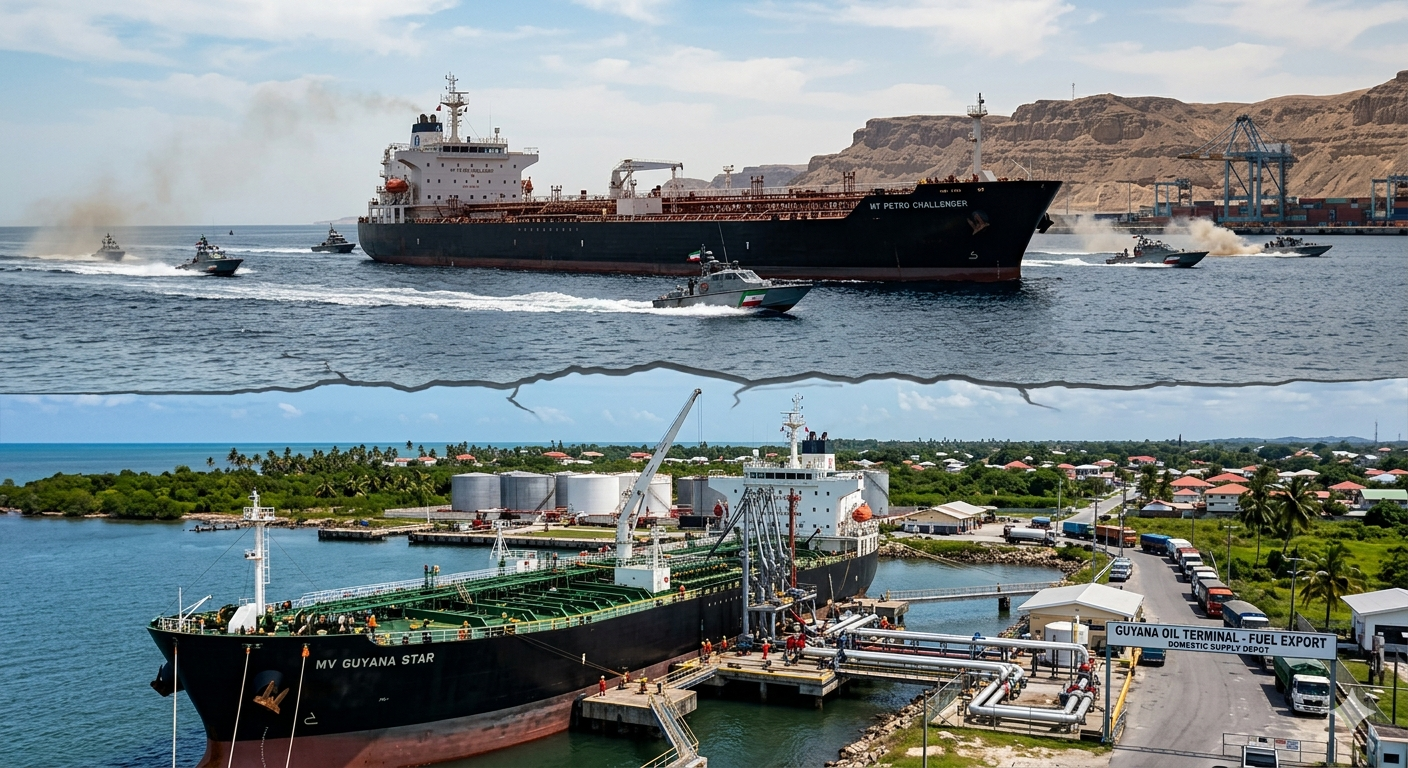
GEORGETOWN, Guyana — Iran’s warning to target Red Sea shipping has raised new risks for global energy flows just as Guyana’s oil-driven boom is exposing domestic fuel vulnerabilities.
Tehran said it would halt shipping in the Red Sea if the United States continued a blockade of vessels that transited Iranian ports via the Strait of Hormuz. Iran does not border the Red Sea but backs Houthi forces in Yemen. The Houthis have repeatedly attacked ships there during the Israel‑Hamas war.
The Red Sea handled about 12% of seaborne oil before the conflict. The Strait of Hormuz accounts for roughly a fifth of global oil and gas exports. Disruptions in either corridor would tighten crude and refined product supplies globally.
That is already reverberating in Guyana, which only began producing oil in 2019 but now depends heavily on crude exports. Oil output has helped push Guyana’s gross domestic product up at an average rate of about 47% per year in recent years. Higher crude prices from the Middle East shock are boosting government receipts and foreign exchange inflows.
But Guyana imports all its refined fuels. The country’s gasoline and diesel supply chain relies on foreign refiners and cross‑border shipping. Recent disruptions tied to the Hormuz closure have driven up prices for refined products and swollen Guyana’s fuel import bill by nearly 40% in recent months, according to market reports.
The spike forced emergency rationing and temporary closures at some gas stations in Georgetown. The shortages underscore a structural gap: strong upstream oil revenues paired with persistent downstream reliance on overseas refining capacity.
The International Monetary Fund warned this week that the Iran war is already weighing on the global economy. The IMF said world growth this year could slow to 3.1% even if the conflict ended today, down from 3.4% in 2025. In a worst‑case scenario, the IMF said the fallout could tip the global economy into recession.
For Guyana, the policy challenge is immediate. Authorities must decide how to convert higher oil income into energy security and stable domestic fuel markets. Options include longer term contracts with refiners, investment in local or regional refining capacity, and strategic stockpiles.
Investors and regional partners are watching. Guyana’s energy receipts have widened fiscal space for infrastructure and social spending. But persistent fuel shortages risk political backlash and could complicate trade logistics that depend on reliable domestic transport fuels.
Georgetown also serves as a hub for growing CARICOM‑Brazil commercial ties. That nexus has prompted private sector groups to organise trade missions out of Guyana to Brazil, underscoring how energy shocks can affect broader regional commerce and logistics.
Short‑term energy price volatility and longer‑term shipping risks will shape Guyana’s near‑term economic path. Policymakers there face the twin task of managing windfall revenues and shoring up fuel supply chains in a more volatile global trading environment.