
Guyana Electric graduates 14 young electricians from a 4-month OSHA-certified programme in Georgetown, targeting Guyana's widening construction skills gap.
Guyana Electric has graduated 14 young Guyanese from a 4-month Basic Electrical Training Programme delivered with the Guyana Police Force and the Georgetown Chamber of Commerce and Industry, part of a broader campaign to rebuild technical skills and safety culture in the construction sector.
What did Guyana Electric's training programme involve?
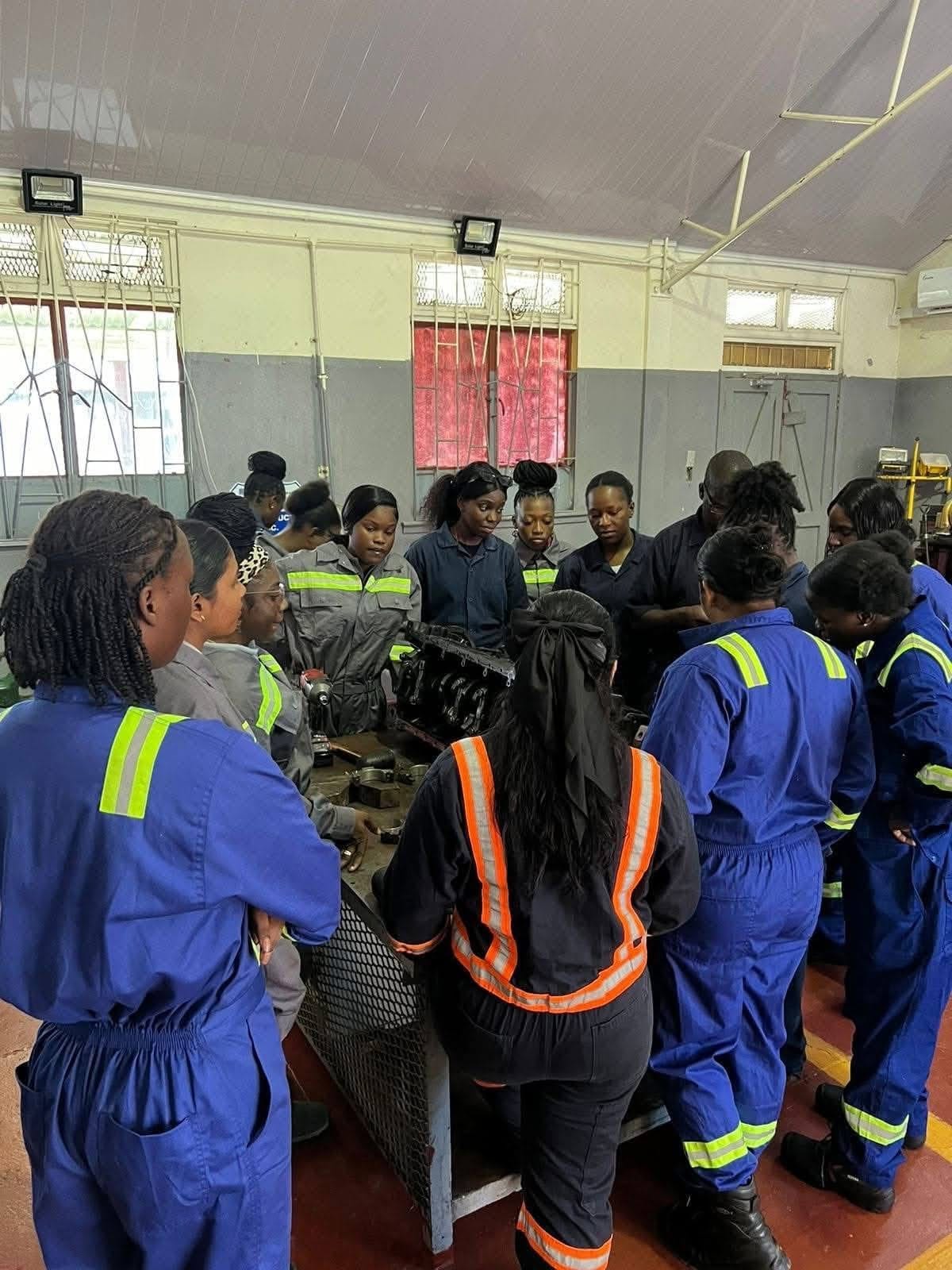
Guyana Electric's Basic Electrical Training Programme ran for 4 months, combining 3 months of classroom instruction with 1 month of supervised field experience, producing 14 graduates trained to OSHA and NECA standards.
The curriculum covered Basic Electrical Principles, Ohm's Law, Electrical Circuits, Single-Phase AC Systems, Transformers, Electrical Testing Equipment, and Electrical Safety. Workplace safety ran as a continuous thread throughout, covering PPE protocols, ladder safety, fall protection, and hazard prevention. Participants received both theoretical grounding and direct field exposure before completing the programme.
The initiative was led by Keon Howard Assanah, GCCI Council Member and Chair of the Construction and HSSE Committee. "Guyana's construction industry was built on mentorship and hands-on learning," Assanah said. "This programme is about restoring that culture. If we want better infrastructure and a safer workforce, we must first commit to building better people."
Why is the electrical skills gap a problem for Guyana?
Guyana Electric's training addresses a widening shortage that workforce analysts say is now structural. Estimates place Guyana's overall skilled worker deficit at approximately 160,000, with professionals not so much filling gaps as holding the economy together under conditions of sustained demand pressure. The construction sector alone accounts for 4.1 percent of GDP and remains one of the country's primary sources of employment outside oil production. Our World in Data
The ILO's Decent Work Country Programme for Guyana, covering 2025 to 2030, identifies improving the quality and relevance of technical and vocational education as a priority policy response, citing labour shortages and skills mismatches across construction, healthcare, logistics, and oil and gas as the most pressing gaps in the economy. That pressure is intensified by an oil boom accelerating demand across every sector simultaneously. As this publication reported in April 2026, Nations University responded to the same workforce gap with a GYD $100,000 tuition reduction on its MBA in Petroleum and Renewable Energy, a signal that the skills deficit is now being addressed from multiple directions. World Bank
The problem extends beyond Guyana's borders. Globally, the electrical contracting industry is contending with a severe and worsening shortage of skilled workers, with the US Bureau of Labor Statistics projecting a need for 80,000 new electrician jobs annually through 2031, driven in part by the retirement of experienced baby boomers, with nearly 30 percent of union electricians now approaching retirement age. NationMaster
What is Guyana Electric's weekly safety campaign and who is it for?
Guyana Electric's weekly safety campaign is a public series reinforcing core electrical safety practices for working tradespeople and industry professionals, targeting the cultural erosion that occurs when fewer senior electricians are available to mentor the next generation.
The campaign centres on five non-negotiable practices:
- Isolate the power source before starting any work
- Verify de-energisation before handling any conductor
- Use the appropriate PPE at all times
- Never bypass safety procedures to save time
- Keep the work area clean, dry, and properly organised
The series runs across Guyana Electric's public channels and is designed to reach electricians in active work environments, not only students in classrooms. Safety culture cannot be maintained by training alone. It requires constant reinforcement in the spaces where the work actually happens. Readers interested in workforce development in the Caribbean construction sector may also find this publication's profile of Guyanese author and leadership educator Rev. Geary Reid relevant, particularly his work on professional standards and organisational development.
What does the training programme structure look like?
The programme is built on a two-phase model aligned with international standards and designed for direct employment entry upon completion.
| Component | Detail |
|---|---|
| Total duration | 4 months |
| Classroom phase | 3 months |
| Field experience | 1 month |
| Cohort 1 graduates | 14 |
| Standards applied | OSHA, NECA |
| Delivery partners | Guyana Police Force, GCCI |
The partnership with the Guyana Police Force and the Georgetown Chamber of Commerce and Industry reflects the programme's intent to function as a community intervention, not just a company training initiative. The Government of Guyana spent GYD $169,326,900 on workforce training programmes in 2024, equipping over 12,000 people with skills across 29 occupational areas, including electrical installation, which saw 35 female participants in that cycle alone. Guyana Electric's programme runs alongside these government efforts, adding private-sector rigour and industry-standard accreditation to the broader national push. World Bank
Employers, training institutions, and community organisations seeking to support or enrol in future programme cohorts are invited to contact Guyana Electric directly at [email protected] or +592-615-9420.
Frequently Asked Questions
Q: What is Guyana Electric's Basic Electrical Training Programme? A: A 4-month programme combining 3 months of classroom instruction and 1 month of field experience, delivered with the Guyana Police Force and GCCI. The first cohort graduated 14 young Guyanese trained to OSHA and NECA standards.
Q: Who led the Guyana Electric youth training initiative? A: Keon Howard Assanah, GCCI Council Member and Chair of the Construction and HSSE Committee, spearheaded the programme as part of his focus on youth development and electrical industry standards in Guyana.
Q: What safety standards does Guyana Electric follow? A: Guyana Electric aligns its training and operations with OSHA guidelines and National Electrical Contractors Association (NECA) standards, covering PPE, fall protection, ladder safety, hazard prevention, and de-energisation procedures.
Q: Why does Guyana Electric run a weekly electrical safety campaign? A: To rebuild a safety culture as fewer experienced tradespeople mentor the next generation. The campaign reinforces core safety practices publicly, reaching working electricians and industry professionals beyond the classroom.
Q: How do I contact Guyana Electric or enquire about future training cohorts? A: Contact Michelle Howard, Chief Operations Officer, at 159 Guyhoc Park, Arapaima Street, Georgetown, Guyana. Email [email protected] or call +592-615-9420.