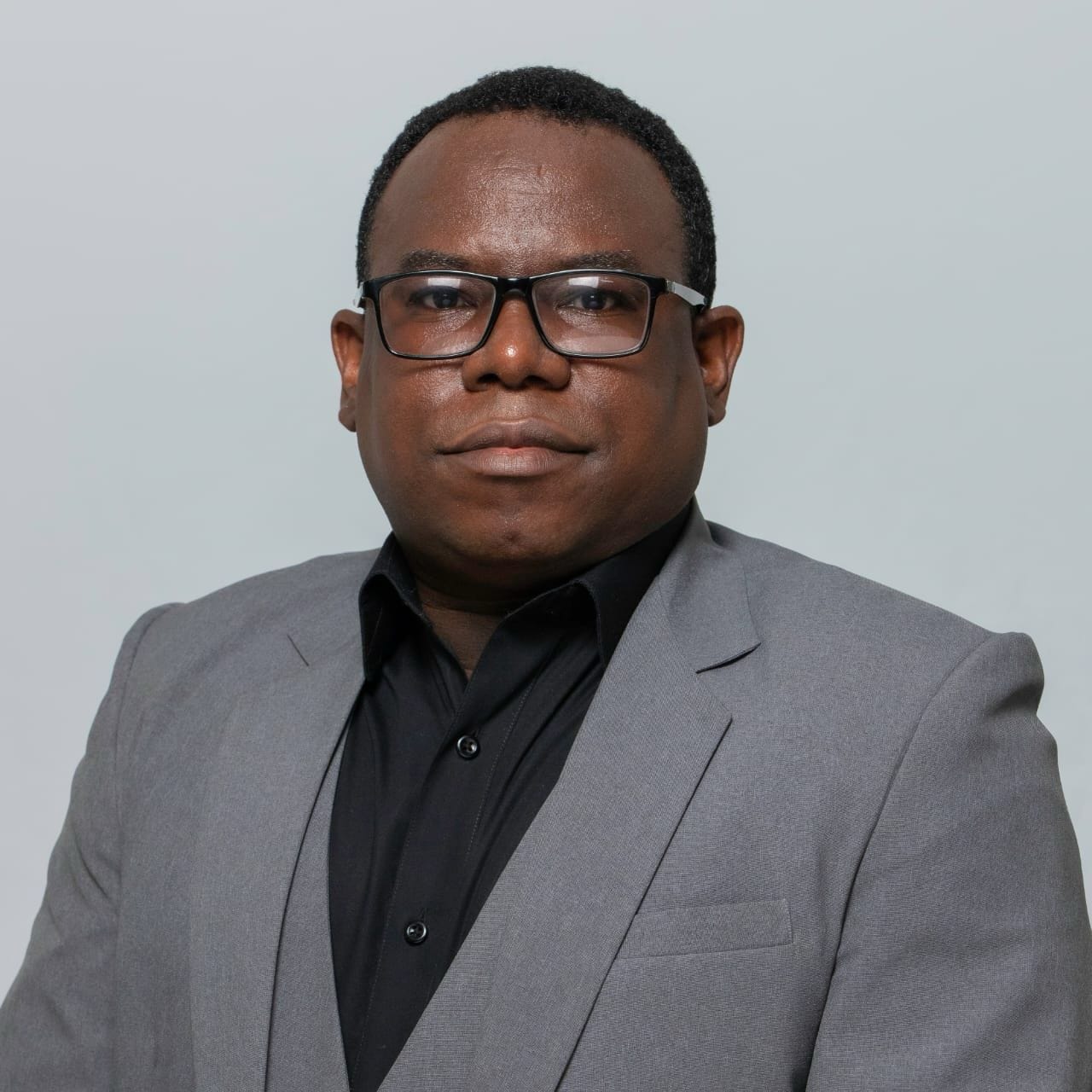
Dr. John Anderson does not look like a man who changes lives. That is precisely the point.
Georgetown, Guyana · May 2026 · La Caribeña News
You have probably passed someone like Dr. John Anderson in a supermarket and said nothing. He does not project the kind of presence that demands a second look. No entourage. No lanyard. No quiet army of residents trailing him at a respectful distance. He looks like a man who came to buy groceries, because he did. And in the next hour, he will be back in his clinic, listening to a patient explain why they stopped taking their blood pressure medication, without judgment, without impatience, with the kind of attention that most people reserve only for things they genuinely love.
That is the story of Dr. John Anderson. And it begins, as many Caribbean stories do, not with a degree or a title, but with a wound that needed dressing.
He was ten years old when he first understood what it meant to care for someone. Growing up in Guyana, he would tend to the cuts and ailments of neighbours and relatives with a seriousness that children rarely bring to anything. His father, recognising something in that instinct, steered him toward pharmacy first, a foundation rather than a detour. By 2000, at just twenty years old, Anderson had earned his Associate of Science in Pharmacy from the University of Guyana. He then spent the better part of a decade inside the Georgetown Public Hospital Corporation, dispensing medication and teaching at the Georgetown School of Nursing. He also served as an Associate Professor in the Doctor of Medicine programme at Georgetown American University, where he chaired the admissions committee. Between the pharmacy counter, the lecture hall, and the committee room, he was building the clinical instinct that would eventually carry him all the way to Edinburgh.
Most people who became physicians by that route would want you to know it. Anderson seems indifferent to the architecture of his own accomplishment. That restraint is not false modesty. It is the signature of a man who entered the profession for the work, not the recognition.
He completed his MBBS at the University of Guyana in 2014, served an internship year at the GPHC, and then joined the Department of Internal Medicine, where he came under the influence of consultants whose names he still invokes with gratitude. He then pursued a Master of Science in Internal Medicine at the University of Edinburgh, completing it in 2020. Edinburgh’s programme is demanding by any measure, built on problem-based learning, virtual patient scenarios, and a breadth of clinical science that separates capable physicians from thoughtful ones. Anderson came back from it not louder, but sharper.
There is a hospital in Houston, Texas, called MD Anderson Cancer Center. It is consistently ranked among the finest medical institutions on the planet. Patients travel to it from every corner of the world because they want more than competent care. They want someone who treats their survival as a personal matter, not a clinical transaction. They want to feel, in the middle of the most frightening experience of their lives, that the person across from them is genuinely invested.
Patients who see Dr. John Anderson in his outpatient clinic at the GPHC Medical Clinic, or at The Centre for Healthcare Excellence Inc. that he founded, sometimes describe a version of exactly that feeling. Not the gleaming infrastructure of a Houston campus, but something less easily built: the sense that the doctor across from them has nowhere else he would rather be.
It is not a small thing to be that kind of physician. It requires a particular constitution, one that Anderson seems to have assembled from an unlikely combination of sources. His pharmacy background gives him a fluency with medication that most physicians acquire only partially. His years of teaching gave him the habit of explaining clearly without condescending. His Bachelor of Theology from the Wesleyan Bible College gave him something else entirely, a way of sitting with suffering that does not flinch from it, and does not rush past it toward the prescription pad.
His specialty is internal medicine, and within that, he has chosen hypertension and stroke as his focus. This is not a glamorous subspecialty. There is no dramatic intervention, no surgery, no single curative moment. Managing hypertension is slow, repetitive, relationship-dependent work. Patients forget to take their tablets. They eat what they should not eat. They come back six months later with numbers that have climbed again. Most of the work happens between appointments, in the behavioural and social terrain that medicine has historically been reluctant to enter.
Anderson entered it anyway. He believes that the one-on-one clinic setting is where adherence is actually built, and that the quality of the relationship between doctor and patient determines more about outcomes than the prescription itself. In Guyana, where hypertension is responsible for a significant share of cardiovascular mortality and stroke burden, this is not a philosophical position. It is a public health intervention.
He founded The Centre for Healthcare Excellence Inc. with that in mind, offering home care services and specialist clinic consultations, with a vision for dedicated hypertension and stroke clinics. The motto is direct: “Choose Excellence because your life matters.” It reads like a challenge as much as a promise. Anderson is asking patients to take their own health seriously, and committing to take it seriously alongside them.
But the clinic is not the whole man.
Anderson sits on the Region 4 road safety council, working with law enforcement to reduce traffic fatalities on Guyana’s roads. The stories and experience he carries from that work are precisely the kind that deserve a wider audience, and attendees of the forthcoming Beyond the Wheels 2.0, National Transportation and Safety Forum at the Arthur Chung Conference Center will be better for hearing them from a clinician who has seen the consequences firsthand. He is a member of the management committee of the Guyana Public Service Co-operative Credit Union, where he polled among the highest vote-getters in the 2024 Special General Meeting. He is, in the truest sense of the phrase, civically present.
The best legal advocates are not the loudest ones. They are the ones who understand the full scope of what their client needs, who read the room, who know when to argue and when to listen, who carry authority without requiring that authority to be announced. Anderson moves through public life the same way. Whether he is at a patient’s bedside, in a credit union board meeting, or working with road safety officials, he brings the same focused attention and the same fundamental orientation: this is a problem I can help solve, and I intend to.
Could he have survived as a lawyer? His gifts are too grounded in the physical and the immediate, in the body of a patient in front of him, in the specific chemistry of a chronic condition that needs managing over years, not argued before a judge. But the instinct that drives a great advocate, the refusal to abandon the people you represent, the willingness to carry their interests into rooms they cannot enter themselves, that is exactly what Anderson brings to every role he holds.
There is a version of this story that ends with a list of credentials and a firm handshake. That is not this version.
Dr. John Anderson is a Guyanese physician who became a pharmacist first, then a doctor, then a specialist, then a postgraduate scholar, then an entrepreneur and civic leader, all while remaining, at his core, the ten-year-old boy who wanted to help the people on his street. That continuity is rare. In a profession that can harden people, or flatten them into technicians, he has remained permeable to the patients he serves.
The next time you pass a quietly dressed man in a supermarket aisle and do not stop to stare, consider that he might be the most important person in that building. Not because of what he carries on his lapel, but because of what he carries in his training, his theology, his years of compounded practice, and his willingness to bring all of it to whoever walks through his door, whether that door is the government clinic at GPHC, where outpatient care costs nothing, or The Centre for Healthcare Excellence, where he has built something worth paying for.
That is the kind of advocate Guyana needs. The kind who does not need a spotlight to do the work.
Dr. John Anderson is a Medical Officer at the Georgetown Public Hospital Corporation Medical Clinic and founder and CEO of The Centre for Healthcare Excellence Inc. He holds an MBBS from the University of Guyana and an MSc in Internal Medicine from the University of Edinburgh, an A.Sc. in Pharmacy from the University of Guyana, and a Bachelor of Theology from the Wesleyan Bible College. He serves on the Region 4 road safety council and the management committee of the Guyana Public Service Co-operative Credit Union.